KU Leuven · Department of Mechanical Engineering
CarlosRodriguez-Guerrero
Associate Professor of Mechanical Engineering
Co-director, Robot Assisted Surgery Lab

Robotic, haptic, extended reality and AI systems that help clinicians learn and perform complex procedures.
About
Carlos Rodriguez-Guerrero is a Colombian-Belgian scientist and engineer working at the intersection of medical robotics, haptics, extended reality and human-centred robotic systems. He is an Associate Professor of Mechanical Engineering at KU Leuven and co-director of the Robot Assisted Surgery Lab (RAS Lab), where he leads research on technologies for surgical training, navigation and robotic assistance.
His research investigates how robotic, haptic, imaging and extended reality technologies, combined with artificial intelligence, can support clinicians during training and intervention. It is organised in three pillars: XR trainers that help surgeons learn complex procedures, XR guidance that helps them perform those procedures, and assistive technologies that support patients and workers. AI runs through both, from computer vision that segments instruments and tracks anatomy in the surgical scene to data driven assessment of how trainees perform.
He has led and co-led research projects funded through Belgian and European research programmes, and has supervised work spanning medical robotics, surgical navigation, haptics, extended reality and simulation-based training. His research has resulted in journal publications, conference contributions, patents and collaborative projects with engineering groups, hospitals and clinical partners.

Research
Three pillars, built on robotics, haptics, extended reality and artificial intelligence, and developed together with clinical partners.
- Robotics
- Haptics
- Extended reality
- AI and computer vision
- Lumbar puncture
- Assisted reproduction (ICSI)
- Cochlear implant surgery
- Maxillofacial osteotomies
- Spine surgery
- Orthopaedic surgery
- Fetal surgery
- Gait rehabilitation
- Upper limb rehabilitation
- Stroke rehabilitation
- Occupational exoskeletons
XR trainers
How to train your surgeon
Virtual reality simulators and haptic interfaces that let clinicians practise complex procedures safely, with automatic, AI supported assessment of how their skills develop.
Virtual reality simulation
Immersive training stations that recreate the procedure, from ICSI to lumbar puncture.
Multimodal haptic feedback
Force, tactile and texture cues that make simulated tissue and tools feel real.
AI performance assessment
Model and data driven methods that score needle trajectories and track how skills develop.
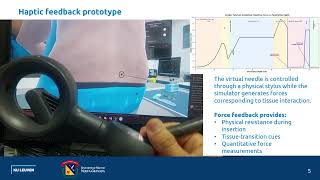 Lumbar punctureXR lumbar puncture simulation: haptic force feedback, kinematic analysis and trajectory assessment
 Assisted reproductionVirtual reality training station for intracytoplasmic sperm injection (ICSI)
XR guidance
How to guide your surgeon
Augmented reality, imaging, AI and robotic assistance that bring the surgical plan to the operating table and keep critical structures, such as the facial nerve, in view.
Augmented reality guidance
Planning and CT data placed in the surgeon's view, from the mastoid to the mandible.
Markerless and trackerless navigation
Following anatomy and instruments without attaching optical markers.
Ultrasound reconstruction
Three-dimensional anatomy built from freehand ultrasound for spine and orthopaedic surgery.
AI scene understanding
Computer vision that segments instruments and hands and tracks anatomy in the surgical video.
Robotic assistance
Robotic systems and 3D visualisation, down to single port fetal surgery, with the clinician in control.
Accuracy evaluation
Markerless methods that measure how well the virtual plan aligns with the patient.
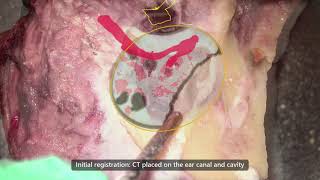 Cochlear implant surgeryAugmented reality navigation for the mastoidectomy, keeping the drill away from the facial nerve
 Maxillofacial surgeryAugmented reality guided osteotomies for maxillofacial surgery
Assistive technologies
How to assist your patient
Robots and wearable devices that move with the human body, for patients in rehabilitation and for workers at risk of injury. This line began with his PhD at the University of Valladolid, where a rehabilitation robot adapted its assistance to the patient's physiological state, grew at the Vrije Universiteit Brussel into a broad programme on exoskeletons, and continues today with active exoskeletons for workers and treadmill based exoskeletons for gait training. It has produced his most cited work, including widely used guidelines on how wearable robots are benchmarked and brought into real workplaces.
Biocooperative rehabilitation
Rehabilitation robots that read the patient's physiological signals online and adapt the level of assistance to each person.
Gait orthoses and compliant actuation
Powered orthoses such as the CORBYS platform, with cable driven and variable stiffness actuators and force sensors that keep the robot safe around people.
Occupational exoskeletons
Back, shoulder and neck support, including the SPEXOR spinal and Exo4Work shoulder exoskeletons, shown to reduce muscle activity, fatigue and metabolic cost.
Human-exoskeleton compatibility
Misalignment compensation and automatic design synthesis so that exoskeleton joints follow the human joints.
Intent detection
Multimodal exoskeleton interfaces that classify the wearer's motion to decide how the device should assist.
Benchmarking and adoption
Test benches, evidence reviews and a roadmap for evaluating wearable robots and bringing exoskeletons into workplaces at scale.
 Project portfolio, 2008 – 2021A video tour of his projects in human-centred physical human-robot interaction
Latest work
- Markerless 3D ultrasound reconstruction for augmented reality assisted minimally invasive spine surgeryInt. J. Computer Assisted Radiology and Surgery
- Multimodal haptics for realistic texture rendering in extended realityACM IMX
- A model-driven and data-driven framework for automatic needle trajectory assessment in XR-based lumbar puncture simulationColombian Conference on Computing
- Markerless augmented reality guidance system for maxillofacial surgery: an omnidirectional tracking methodHealth Science Reports
- 3D visualization from single-chip camera in single port access fetal robotic surgeryInternational Symposium on Medical Robotics
- Design and evaluation of AE4W: an active and flexible shaft-driven shoulder exoskeleton for workersWearable Technologies
Teaching
B-KUL-T4TMD2 · 6 ECTS · Course coordinator
Medical Devices
Faculty of Engineering Technology, Group T Leuven Campus. The course shows how engineering technology is used to create medical devices, covering design, development and the regulatory framework that governs their use. Its haptics part looks at emerging devices such as VR surgical trainers, smart instruments, rehabilitation robots, exoskeletons and robotic prostheses.
Includes Haptic Interfaces, which he also coordinates as a course (B-KUL-T4HHI2) in the Master of Electronics and ICT Engineering Technology.
Student projects
In the Haptic Interfaces part of the course, student teams build open source haptic prototypes for medical applications. Each year's projects are published on the course channel.
Haptic Interfaces KU LeuvenAll student projects on YouTube ↗


Other courses
- Information ManagementCoordinator
- Control Systems and ApplicationsLecturer
Background
- Associate Professor of Mechanical Engineering, KU LeuvenCo-director, Robot Assisted Surgery Lab (RAS Lab)
- Guest Professor, Vrije Universiteit Brussel
- Postdoctoral Researcher, Vrije Universiteit Brussel
- PhD, University of ValladolidThesis: Psychophysiological feedback control in physical human-robot interaction.
- Diploma of Advanced Studies (DEA), University of Valladolid
- Engineer in industry
- BSc in Mechatronics Engineering, Universidad Militar Nueva Granada